How Memory Care Sustains Freedom While Offering Needed Assistance
Business Name: BeeHive Assisted Living Homes of Rio Rancho NM #1 - Dementia Care & Memory Care
Address: 204 Silent Spring Rd NE, Rio Rancho, NM 87124
Phone: (505) 221-6400
BeeHive Assisted Living Homes of Rio Rancho NM #1 - Dementia Care & Memory Care
BeeHive Assisted Living Homes of Rio Rancho NM #1 - Dementia Care & Memory Care is a premier Rio Rancho Assisted Living facilities and the perfect transition from an independent living facility or environment. Our Alzheimer care in Rio Rancho, NM is designed to be smaller to create a more intimate atmosphere and to provide a family feel while our residents experience exceptional quality care. We promote memory care assisted living with caregivers who are here to help. Memory care assisted living is one of the most specialized types of senior living facilities you'll find. Dementia care assisted living in Rio Rancho NM offers catered memory care services, attention and medication management, often in a secure dementia assisted living in Rio Rancho or nursing home setting.
204 Silent Spring Rd NE, Rio Rancho, NM 87124
Business Hours
Memory loss alters the shape of daily life in ways households do not constantly anticipate. At first, the adjustments can be subtle. A missed expense repayment below, a pot left on the stove there, a duplicated senior living concern that as soon as seemed safe. Gradually, those small slips can become real safety issues, however the person experiencing them may still want the same things they constantly desired, privacy, self-respect, acquainted routines, a say in just how the day unravels, and room to do as much for themselves as possible.
That tension, in between requiring help and wanting freedom, is where memory care does a few of its best work.
Good memory care is not concerning taking over. It has to do with shaping assistance to ensure that a person can maintain participating in life rather than being performed it. The very best neighborhoods recognize that independence does not go away when memory modifications. It simply requires a different sort of security. A person might no longer take care of a schedule or bear in mind every medication, however they may still select their clothes, water the plants, fold towels, set the table, walk the hallway with self-confidence, or decide whether they want tea or coffee with breakfast. Those selections matter greater than individuals often realize.
Independence looks various, yet it still matters
Families often picture memory care as an area where whatever is done for the resident. That picture is easy to understand, yet it is incomplete. Great senior care is built around finding the right balance, sufficient assist to decrease risk, sufficient liberty to preserve identity.
A resident who used to be a precise home chef may not safely manage the oven anymore, however they might still appreciate mixing batter in a monitored kitchen area activity or arranging recipe cards. Somebody who managed a house for years may not bear in mind the series for showering, but they might still have the ability to wash their face, comb their hair, or pick the perfumed soap they like. These are not trivial jobs. They are pieces of selfhood.
A well-run memory care neighborhood pays attention to what a person can still do, not simply what they have actually shed. That shift alters the tone of care. Instead of seeing every job as a trouble to resolve, personnel seek opportunities to invite involvement. A resident may need pointers to get dressed, however still pick in between a blue sweater and an eco-friendly one. They may require help browsing the dining room, yet still make a decision whether they wish to sit by the window.
That type of support safeguards dignity in a practical way. It claims, "You are still right here. Your choices still count."
Why the right amount helpful maintains confidence
People living with memory loss often become irritated when tasks feel also tough. They might think twice, get stuck midway with an activity, or abandon an activity altogether due to the fact that the steps no more make sense. When that occurs continuously, confidence goes down quick. An individual who when prided themselves on being capable can begin to really feel self-conscious, nervous, or defeated.
Memory care minimizes that spiral by supplying just sufficient guidance to maintain the person relocating. Personnel do not just action in and complete everything. They break tasks into smaller parts, cue carefully, and stay close enough to aid without overwhelming. Often that suggests supplying one guideline at a time. Often it suggests laying out clothing in the order they will be put on. Occasionally it implies standing nearby during a shower, ready to assist only when needed.
The difference may seem small, but it alters the emotional experience totally. A resident that gets to finish component of a job effectively really feels qualified. That feeling supports participation, reduces agitation, and commonly makes the remainder of the day easier.
I have actually seen this in real settings: a resident who rejected early morning aid for weeks since every attempt felt hurried, however who started preparing much more comfortably as soon as staff reduced the process down and let him switch the last tee shirt switch himself. That small act did not just save time. It recovered a little pride.
Environment issues as much as staffing
Memory care works best when the physical environment itself sustains freedom. Hallways ought to be simple to navigate. Typical areas must really feel familiar instead of institutional. Aesthetic cues, color contrast, and straightforward layouts aid citizens orient themselves without continuous correction.
A resident might not bear in mind the space number appointed to them, but they might recognize a favorite chair, a quilt they brought from home, or the intense indicator aiming towards the dining room. These environmental supports lower dependence on spoken tips, which can be hard to maintain when temporary memory is impaired.
Safe roaming courses are especially important. Lots of people with dementia feel a strong need to walk. They might be searching for something, reliving a regular from years earlier, or just attempting to ease restlessness. In a memory care setup, strolling is not treated as misdeed. It is transported securely. That might mean encased courtyards, kept an eye on courses, or personnel who comprehend that activity often aids more than sitting still ever could.
The goal is to create an area where a resident can move with objective, not a labyrinth that catches them. That distinction issues. Way too much limitation can make a person much more flustered. Insufficient oversight can result in unsafe situations. A thoughtful environment makes freedom safer.
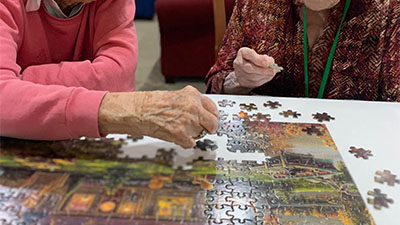
Daily routines produce space for autonomy
People living with memory loss commonly do far better when the day has a foreseeable rhythm. Routine minimizes the problem of decision-making, which can come to be stressful when memory suffers. However routine must not really feel rigid. The best memory care areas use framework as a structure, not a script.
Morning may start with a regular wake-up time, complied with by assist with clothing and grooming, then breakfast in a familiar dining area. After that, residents might pick from a few activities, such as songs, a brief workout session, folding towels, or sitting in the yard. That equilibrium between predictability and option gives the day shape without making it feel controlled.
A resident who understands what normally takes place next frequently feels calmer and a lot more happy to get involved. They do not need to relearn the entire day every morning. At the exact same time, being supplied selections, also minimal ones, keeps them engaged. Choice maintains agency.
This is among the quieter staminas of memory care. It aids an individual stay clear of the endless exhaustion that comes from making way too many decisions, while still safeguarding the feeling that the day belongs to them.
Skilled support can be undetectable when it is done well
The finest assistance in elder care often goes unnoticed by families initially glimpse. That is since skilled caretakers are not continuously announcing their treatments. They are viewing, expecting, and actioning in with a light touch.
If a resident battles to keep in mind where their room is, a caretaker could use to stroll with them rather than merely directing them there. If someone comes to be confused during mealtime, staff might seat them in a quieter spot or hint them with the initial bite so the remainder follows extra quickly. If a resident has difficulty getting going with an activity, a caregiver might hand them a familiar object and let muscle mass memory do the rest.
This type of support needs perseverance and judgment. It likewise calls for humbleness. Caretakers need to stand up to the urge to hurry, and families in some cases need aid knowing that slower is not the same as less efficient. A job finished much more slowly, with the resident doing as long as feasible, often safeguards working longer than doing every little thing on their behalf.
That is specifically true in memory care near me looks families often make when they are instantly bewildered. Individuals typically start by looking for safety, but they rapidly understand they likewise need an area that values that their loved one still is. The best neighborhood comprehends that both demands can be met at once.
Communication modifications, however link remains possible
Memory loss can make discussions unpredictable. An individual might lose the thread halfway with a sentence, repeat the same inquiry a number of times, or substitute a familiar word for the one they suggest. That does not imply they are inaccessible. It suggests the conversation needs a different shape.
Memory care staff are trained to connect in ways that minimize aggravation. They talk clearly, utilize brief expressions, make eye call, and offer the individual time to respond. They likewise know when to stop fixing. If the realities are less important than the feeling underneath words, they reply to the feeling, not the mistake.
That approach safeguards independence in a subtle method. An individual that feels understood is more probable to stay involved. A person who feels fixed at every turn might withdraw.
Families commonly discover that connection survives in unexpected forms. A resident who no longer keeps in mind current visits may still brighten when hearing a favored track. Someone who battles with names might still identify the feeling of a hand press, the scent of fresh coffee, or the view of a grandchild's laugh. Memory care uses those staying pathways to keep link alive.
When memory care is the right sort of support
Not every family reaches memory care at the very same factor. Some wait up until wandering, medicine mistakes, or nighttime confusion become impossible to take care of in the house. Others move earlier, when the daily stress on everyone has become too hefty, also if the person with amnesia is still doing many points independently.
There is no perfect limit, but several indicators usually suggest that more organized support would certainly help. A person may miss meals, leave water running, end up being shed in acquainted areas, mismanage medications, or reveal raising anxiety when left alone. Caregivers at home may discover themselves exhausted by consistent supervision, and that exhaustion issues as well. Burnout influences the entire household.
This is where senior living near me searches usually turn into deeper conversations regarding safety, staffing, and day-to-day rhythm. Family members are not simply comparing layout. They are looking for the right level of support prior to situation compels the decision.
Memory care is not only for the most innovative stage of dementia, either. Sometimes an individual needs this setup due to the fact that their threat level is higher than what family members can safely handle, even if they still enjoy discussion, songs, and light activities. A thoughtful move can maintain abilities much longer by minimizing tension and avoiding accidents.
Respite care can be a beneficial bridge
Families usually need time to understand what memory care seems like prior to making an irreversible step. Respite care can help with that. A brief remain offers the resident an opportunity to settle right into a structured atmosphere, and it provides family members caretakers a break from the unrelenting work of supervision.
Respite care also exposes functional truths. Families might learn that their loved one eats much better with cueing, rests much more soundly with a calmer night regimen, or comes to be less nervous when the atmosphere is a lot more foreseeable. Those observations can form next steps with much less guesswork.
For caretakers in the house, respite care can be an alleviation that restores viewpoint. Fatigue makes every choice harder. Even a couple of days away from day-and-night caregiving can aid a spouse, grown-up child, or brother or sister think more plainly about what comes next. It is not a sign of failure. It is commonly the factor where the family members finally obtains enough breathing space to make great decisions.
What to try to find in a memory care community
Families looking for memory care near me often contrast facilities first, but the daily culture issues greater than the sales brochure. A lovely building can still really feel confusing or cold if staff do not recognize exactly how to support autonomy. A smaller, simpler atmosphere can be much better if the team understand citizens well and understand just how to encourage participation.
A few signs typically attract attention in a strong community. Locals are not left sitting idle for long stretches. Team address individuals by name and speak with them respectfully. Mealtimes really feel orderly but not hurried. There is a sense that residents are being invited right into the day, not managed with it. Households rate as companions, not dealt with like visitors who need to avoid of the way.

Pay focus to what citizens are doing throughout your visit. Are they involved, or just inhabited? Do staff action in with perseverance when somebody is perplexed, or do they redirect everyone too swiftly? Does the neighborhood appear created to lower stress and anxiety, or just have it? These information inform you just how much freedom is truly being protected.
If it aids, focus on a few functional questions during your visit:
- How does personnel support locals who can still do components of a task on their own?
- What happens when a resident refuses assistance or comes to be frustrated?
- How are activities adjusted for various ability levels?
- How does the community deal with roaming, restlessness, or nighttime confusion?
- How do households stay involved in day-to-day care decisions?
Those inquiries typically expose more than a refined tour ever will.
Respect is the thread that holds everything together
At its core, memory care is not almost guidance. It is about regard. Respect for a person's routines, choices, comfort zones, and staying toughness. Respect for the fact that memory loss does not erase individuality. Regard for the tough equilibrium families carry when they are attempting to keep someone safe without making them feel helpless.
That is why the very best memory care feels much less like a takeover and even more like an arrangement built around trust. The resident obtains a little less burden, a little more support, and a lot extra consistency. The family members gets peace of mind, however also something else that is tougher to measure, the knowledge that their loved one is still participating in life.
The objective is never ever to remove self-reliance for safety. The objective is to secure the parts of independence that still issue, while quietly covering the components that have become too difficult or as well high-risk to handle alone. When that equilibrium is right, a person can still seem like themselves, even as they receive the help they require. That is the real assurance of memory care, and it is what thoughtful senior care should always intend to do.
BeeHive Assisted Living Homes of Rio Rancho NM #1 - Dementia Care & Memory Care provides assisted living care
BeeHive Assisted Living Homes of Rio Rancho NM #1 - Dementia Care & Memory Care provides memory care services
BeeHive Assisted Living Homes of Rio Rancho NM #1 - Dementia Care & Memory Care provides respite care services
BeeHive Assisted Living Homes of Rio Rancho NM #1 - Dementia Care & Memory Care supports assistance with bathing and grooming
BeeHive Assisted Living Homes of Rio Rancho NM #1 - Dementia Care & Memory Care offers private bedrooms with private bathrooms
BeeHive Assisted Living Homes of Rio Rancho NM #1 - Dementia Care & Memory Care provides medication monitoring and documentation
BeeHive Assisted Living Homes of Rio Rancho NM #1 - Dementia Care & Memory Care serves dietitian-approved meals
BeeHive Assisted Living Homes of Rio Rancho NM #1 - Dementia Care & Memory Care provides housekeeping services
BeeHive Assisted Living Homes of Rio Rancho NM #1 - Dementia Care & Memory Care provides laundry services
BeeHive Assisted Living Homes of Rio Rancho NM #1 - Dementia Care & Memory Care offers community dining and social engagement activities
BeeHive Assisted Living Homes of Rio Rancho NM #1 - Dementia Care & Memory Care features life enrichment activities
BeeHive Assisted Living Homes of Rio Rancho NM #1 - Dementia Care & Memory Care supports personal care assistance during meals and daily routines
BeeHive Assisted Living Homes of Rio Rancho NM #1 - Dementia Care & Memory Care promotes frequent physical and mental exercise opportunities
BeeHive Assisted Living Homes of Rio Rancho NM #1 - Dementia Care & Memory Care provides a home-like residential environment
BeeHive Assisted Living Homes of Rio Rancho NM #1 - Dementia Care & Memory Care creates customized care plans as residents’ needs change
BeeHive Assisted Living Homes of Rio Rancho NM #1 - Dementia Care & Memory Care assesses individual resident care needs
BeeHive Assisted Living Homes of Rio Rancho NM #1 - Dementia Care & Memory Care accepts private pay and long-term care insurance
BeeHive Assisted Living Homes of Rio Rancho NM #1 - Dementia Care & Memory Care assists qualified veterans with Aid and Attendance benefits
BeeHive Assisted Living Homes of Rio Rancho NM #1 - Dementia Care & Memory Care encourages meaningful resident-to-staff relationships
BeeHive Assisted Living Homes of Rio Rancho NM #1 - Dementia Care & Memory Care delivers compassionate, attentive senior care focused on dignity and comfort
BeeHive Assisted Living Homes of Rio Rancho NM #1 - Dementia Care & Memory Care has a phone number of (505) 221-6400
BeeHive Assisted Living Homes of Rio Rancho NM #1 - Dementia Care & Memory Care has an address of 204 Silent Spring Rd NE, Rio Rancho, NM 87124
BeeHive Assisted Living Homes of Rio Rancho NM #1 - Dementia Care & Memory Care has a website https://beehivehomes.com/locations/rio-rancho/
BeeHive Assisted Living Homes of Rio Rancho NM #1 - Dementia Care & Memory Care has Google Maps listing https://maps.app.goo.gl/FhSFajkWCGmtFcR77
BeeHive Assisted Living Homes of Rio Rancho NM #1 - Dementia Care & Memory Care has Facebook page https://www.facebook.com/BeeHiveHomesRioRancho
BeeHive Assisted Living Homes of Rio Rancho NM #1 - Dementia Care & Memory Care has a YouTube Channel at https://www.youtube.com/@WelcomeHomeBeeHiveHomes
BeeHive Assisted Living Homes of Rio Rancho NM #1 - Dementia Care & Memory Care won Top Memory Care Homes 2025
BeeHive Assisted Living Homes of Rio Rancho NM #1 - Dementia Care & Memory Care earned Best Customer Service Award 2024
BeeHive Assisted Living Homes of Rio Rancho NM #1 - Dementia Care & Memory Care placed 1st for Assisted Living Communities 2025
People Also Ask about BeeHive Assisted Living Homes of Rio Rancho NM #1 - Dementia Care & Memory Care
What is BeeHive Homes of Rio Rancho Living monthly room rate?
The rate depends on the level of care that is needed (see Pricing Guide above). We do a pre-admission evaluation for each resident to determine the level of care needed. The monthly rate is based on this evaluation. There are no hidden costs or fees
Can residents stay in BeeHive Homes of Rio Rancho until the end of their life?
Usually yes. There are exceptions, such as when there are safety issues with the resident, or they need 24 hour skilled nursing services
Does BeeHive Homes of Rio Rancho have a nurse on staff?
No, but each BeeHive Home has a consulting Nurse available 24 – 7. if nursing services are needed, a doctor can order home health to come into the home
What are BeeHive Homes of Rio Rancho visiting hours?
Visiting hours are adjusted to accommodate the families and the resident’s needs… just not too early or too late
Do we have couple’s rooms available?
Yes, each home has rooms designed to accommodate couples. Please ask about the availability of these rooms
Where is BeeHive Homes of Rio Rancho located?
BeeHive Homes of Rio Rancho is conveniently located at 204 Silent Spring Rd NE, Rio Rancho, NM 87124. You can easily find directions on Google Maps or call at (505) 221-6400 Monday through Friday 9:00am to 5:00pm
How can I contact BeeHive Homes of Rio Rancho?
You can contact BeeHive Assisted Living Homes of Rio Rancho NM #1 - Dementia Care & Memory Care by phone at: (505) 221-6400, visit their website at https://beehivehomes.com/locations/rio-rancho, or connect on social media via Facebook or YouTube
Visiting the Haynes Community Center and Park provides a quiet neighborhood setting where seniors in assisted living and memory care can relax outdoors during senior care and respite care visits.